Walkway & Steps Installation The path from driveway to front door — level, safe, and lasting decades.
MA hardscape contractor for walkway installation, front entry steps, garden paths, and sidewalk replacement. Concrete pavers, natural bluestone, irregular flagstone, poured concrete, and brick. Proper gravel base, compaction, and frost-depth footings so your walkway survives MA freeze-thaw cycles without heaving.
The Twenty Feet That Set the Tone
The walkway from your driveway or sidewalk to your front door is the first surface every visitor, delivery driver, and potential buyer walks on. A cracked, heaved, uneven walkway communicates neglect before anyone sees the inside of the house. A level, well-laid stone or paver walkway communicates care — and it does it 365 days a year, including the 80+ freeze-thaw days that Massachusetts throws at it.
Most walkway failures in Massachusetts aren’t material failures — they’re base failures. The stones or pavers are fine. But the gravel base underneath wasn’t deep enough, wasn’t compacted properly, or didn’t drain well. Water saturated the base, froze, expanded, and pushed the walkway surface up unevenly. Come spring, it settles unevenly. After a few cycles, you have a trip hazard.
At JM All-Pro Services, we build walkways that survive MA winters because we build the base correctly — 6-8 inches of compacted processed gravel, 1 inch of leveling sand, proper pitch for drainage away from the house, and edge restraints that keep pavers from migrating. The material on top — pavers, bluestone, flagstone, brick, or concrete — goes on a foundation that handles freeze-thaw.
Walkway Materials We Install
Each material creates a different look, feel, and maintenance profile. The most popular options for Massachusetts walkways:
Concrete Pavers
Interlocking concrete pavers — the most popular walkway material in MA. Enormous variety of colors, shapes, and patterns. Individual units can be replaced if damaged. Strong, consistent, and the best balance of cost and aesthetics.
Natural Bluestone
Pennsylvania bluestone — the quintessential New England walkway stone. Blue-gray color with natural cleft surface. Thermal finish for slip resistance. Cut into uniform rectangles or irregular shapes. Premium material, premium look.
Irregular Flagstone
Natural stone with irregular edges — organic, garden-style walkways. Set in sand or mortar. Each piece unique. Creates a casual, naturalistic path that blends with landscape. Best for garden walks and side paths.
Poured Concrete
Traditional poured concrete walkways. Clean, modern, affordable. Can be stamped to mimic stone or brick patterns. Broom finish for traction. Control joints prevent random cracking. Most affordable option per square foot.
Clay Brick
Classic New England brick walkways. Timeless appearance. Herringbone, running bond, or basket-weave patterns. Historically accurate for colonial and federal-style homes. Natural non-slip texture when wet.
Granite Steps & Treads
Solid granite for entry steps and stair treads. Extremely durable — lasts centuries. Thermal or flamed finish for traction. Often paired with bluestone or paver walkways. The most permanent step material available.
Walkway Project Types
Different situations call for different walkway solutions. The most common projects:
Front Entry Walkway
Driveway or sidewalk to front door. The most visible walkway. Usually 3-4 feet wide with entry steps at the door. Straight or gently curved.
Front Entry Steps
Steps from walkway up to front door. Granite, bluestone, or concrete treads. Proper footings below frost line. Handrails if 3+ risers per MA code.
Garden Path
Backyard or side-yard walking path through gardens, to patio, or connecting outdoor areas. Flagstone or pavers with planting gaps between stones.
Driveway-to-Back-Door Path
The path most families actually use daily — driveway to side or back entrance. Often neglected but used more than front walkway.
Sidewalk Replacement
Replacing cracked, heaved concrete sidewalk along property frontage. Some towns require property owner maintenance of adjacent sidewalk.
Wheelchair Ramp + Walkway
ADA-compliant walkway with ramp for wheelchair or mobility device access. Proper slope ratio, non-slip surface, handrails. Aging-in-place integration.
Pool or Hot Tub Path
Non-slip walkway to pool deck or hot tub pad. Textured pavers or thermal bluestone for wet-foot safety. Drainage critical around water features.
Repair & Relevel
Existing walkway heaved or sunken from freeze-thaw. Pull up pavers, re-compact base, add gravel, relay. Often cheaper than full replacement.
Why Walkway Installation in MA Is Different
A walkway installed in Massachusetts faces conditions that walkways in warmer states never encounter. Every design and installation decision accounts for these realities:
Freeze-Thaw Heaving
80+ freeze-thaw cycles per year push poorly-based walkways upward. 6-8″ compacted gravel base prevents this by allowing drainage below frost line.
Ice & Snow Load
Walkways must handle snow shovels, ice melt chemicals, and foot traffic on ice. Material must resist salt damage and de-icer chemicals.
Step Footing Depth
Step footings must extend below 48″ frost depth in MA. Shallow footings heave — steps tilt, separate from walkway, become trip hazards.
Drainage Away from House
Walkways must pitch away from the foundation — 1/4″ per foot minimum. Water running toward the house causes basement moisture problems.
Trip Hazard Liability
Uneven walkway surfaces are the #1 homeowner liability exposure. A guest trips on a raised paver — you’re liable. Level walkways prevent lawsuits.
ADA Accessibility
Aging-in-place walkways need wheelchair/walker-friendly surfaces — smooth, level, and with proper ramp slopes where grade changes exist.
Our Walkway Installation Process
Typical walkway installations complete in 3-5 days. Steps with footings add 1-2 days:
On-Site Design
Walk the property. Discuss material preferences, path routing, step locations. Mark layout with spray paint. Measure for material quantities.
Excavation
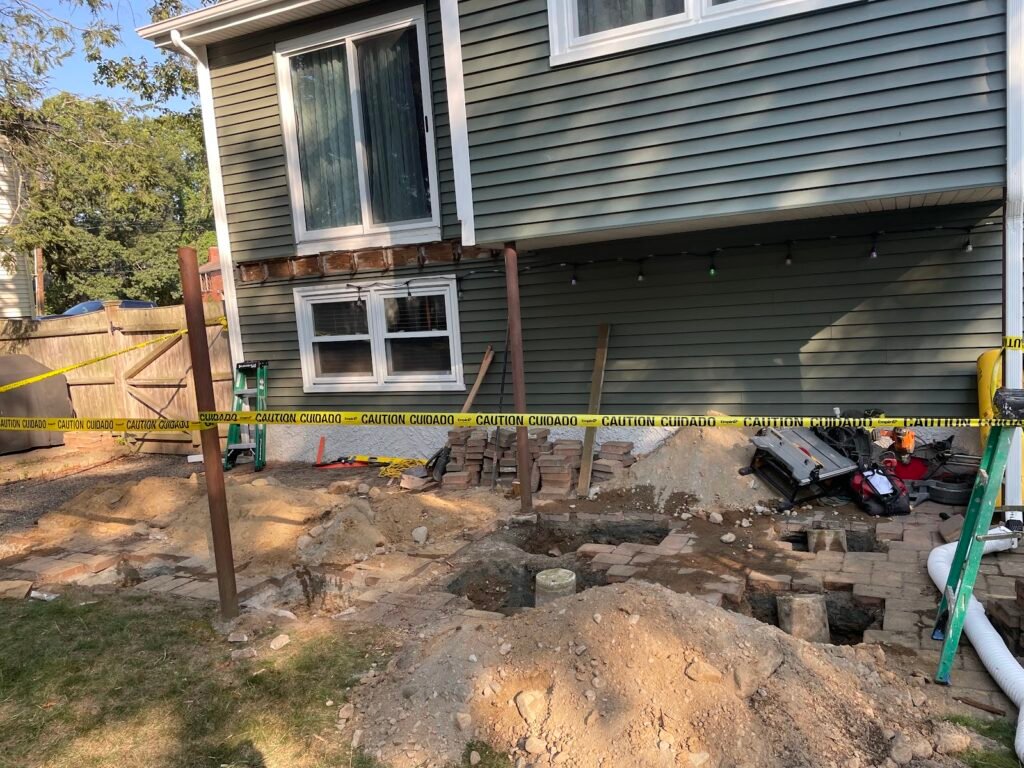
Remove existing walkway if present. Excavate to proper depth (10-12″ typical for pavers — 6-8″ gravel + 1″ sand + material thickness). Grade for drainage pitch.
Base Preparation
6-8″ processed gravel installed in lifts. Each lift compacted with plate compactor. This is the most critical step — the base determines whether the walkway stays level for 20 years.
Step Footings (If Needed)
Concrete footings poured to 48″ frost depth for entry steps. Rebar reinforcement. Allow cure time before setting step treads.
Edge Restraint
Paver edge restraints spiked into compacted base around perimeter. Prevents pavers from migrating outward over time. Critical for longevity.
Material Installation
1″ leveling sand screeded. Pavers, bluestone, flagstone, or brick laid in chosen pattern. Cut pieces at edges. Steps set on footings.
Joint Fill & Cleanup
Polymeric sand swept into paver joints (prevents weed growth and ant intrusion). Final compaction pass. Edges cleaned. Landscaping restored. Walkthrough.
What Affects Walkway Cost
Material Choice
Concrete cheapest. Pavers mid. Brick mid-high. Bluestone premium. Granite steps highest per unit.
Total Square Footage
Longer or wider walkways use more material and more base gravel. Typical front walkway: 80-150 sq ft.
Number of Steps
Each step requires frost-depth footings, treads, and risers. Steps add significant cost vs flat walkway.
Existing Removal
Removing old concrete, asphalt, or pavers adds demo labor and disposal cost. New-path-only cheapest.
Site Grade
Flat sites easiest. Sloped sites need more excavation, retaining edges, or stepped sections.
Pattern Complexity
Running bond simplest. Herringbone moderate. Complex patterns with borders and inlays add cutting time.
Lighting
Low-voltage path lighting along walkway adds cost but adds safety and dramatic curb appeal at night.
Handrails
MA code requires handrails on steps with 3+ risers. Aluminum or wrought iron railings add cost but are required.
Why Choose JM All-Pro for Walkways
iCompacted Base Standard
6-8″ compacted processed gravel on every walkway. Not 2″ of sand on dirt. The base is why our walkways stay level through MA winters.
iiMA Licensed
CSL #121166, HIC #214808. Insured. Hardscape and general construction capabilities under one license.
iiiFrost-Depth Footings
Step footings to 48″ below grade per MA requirement. Shallow footings heave — we don’t cut this corner.
ivDrainage Engineered
Every walkway pitched away from house foundation. 1/4″ per foot minimum slope. Prevents water from running toward your basement.
vPolymeric Sand Joints
Polymeric sand in every paver joint. Prevents weed growth, ant intrusion, and joint erosion. Not just regular sand.
viEdge Restraints Installed
Paver edge restraints spiked around entire perimeter. Pavers don’t migrate outward over years. Many contractors skip this.
viiAging-in-Place Integration
Walkways designed for wheelchair/walker access when needed. Level surfaces, proper ramp slopes, non-slip finishes for aging homeowners.
viiiLandscape Restoration
Disturbed lawn edges, garden beds, and landscaping restored after walkway installation. Your yard isn’t left torn up.
∿ Walkway Installation Service Areas
Based in Clinton, MA. Walkway and steps installation across Worcester County, Middlesex County, and MetroWest:
Related Services
Walkway Installation FAQs
How much does a new walkway cost in Massachusetts?
Cost depends on material, length, width, number of steps, and existing removal needs. Poured concrete is the most affordable per square foot. Concrete pavers are mid-range with the best value for aesthetics and longevity. Bluestone and granite are premium materials. A typical front walkway (3-4 feet wide, 20-40 feet long) with 2-3 entry steps falls in the mid-range for most budgets. Written estimates after on-site measurement and material selection.
How long does walkway installation take?
Most walkway installations complete in 3-5 working days. Day 1: excavation. Days 2-3: base preparation and compaction. Days 3-4: material installation. Day 5: joint fill, cleanup, and landscaping restoration. Steps with frost-depth footings add 1-2 days for concrete curing. Weather delays are possible but walkway work can proceed in light rain.
Why does the gravel base matter so much?
The gravel base is the foundation of the entire walkway. In Massachusetts, water in the ground freezes and expands during 80+ annual freeze-thaw cycles. A deep gravel base (6-8 inches) allows water to drain below the frost line instead of freezing under the walkway surface. Without proper base depth and compaction, walkways heave, tilt, and become trip hazards within 3-5 years. The base is invisible but it’s the most important part of the installation.
What’s the best walkway material for Massachusetts?
Concrete pavers offer the best all-around value — durable, wide variety of styles, individual units replaceable, and handle freeze-thaw well. Bluestone is the premium New England choice for homes where aesthetics justify the investment. Poured concrete is best for budget-conscious projects. Brick is ideal for historically accurate colonial homes. Flagstone is best for garden paths where a natural look matters more than a perfectly flat walking surface.
Do front steps need footings below frost line?
Yes — any permanent steps attached to a walkway or house need footings extending below the 48-inch frost depth in Massachusetts. Without proper frost-depth footings, steps will heave and separate from the walkway or house foundation during freeze-thaw cycles. This is a building code requirement, not optional. Steps on shallow footings are the most common walkway failure we see on older installations.
Can you fix my existing walkway without replacing it?
Often yes — if the walkway material (pavers, bluestone, brick) is still in good condition but the surface has become uneven from frost heaving, we can pull up the surface material, re-excavate and re-compact the base, add gravel where needed, and relay the original material. This is typically 40-60% of the cost of full replacement. If the material itself is cracked, chipped, or deteriorated, full replacement is the better investment.
Do I need handrails on my front steps?
Massachusetts building code requires handrails on any stairway with 3 or more risers. For walkway steps with only 1-2 risers, handrails are not required by code but are recommended for safety — especially for older homeowners or in icy winter conditions. Handrail material options include aluminum (most affordable, zero maintenance), wrought iron (traditional look), and stainless steel (modern aesthetic).
What about walkway lighting?
Low-voltage LED path lighting along walkways adds safety and dramatic curb appeal. Lights can be integrated during walkway installation (wiring run under the base before pavers go down) or added after (surface-mounted fixtures). Solar-powered options available for simpler installation. Path lighting is especially valuable for front walkways used after dark and for aging-in-place safety.
Will salt and ice melt damage my walkway?
Standard rock salt (sodium chloride) can damage natural stone surfaces over time. For bluestone and flagstone, we recommend calcium chloride or magnesium chloride ice melt products instead. Concrete pavers handle most de-icers well. Poured concrete with proper sealer resists salt damage. We can recommend the right ice melt for your specific walkway material during the project walkthrough.
How do I get started?
Call (508) 925-0396 or submit the quote form. Tell us what you’re envisioning — new walkway, step replacement, existing walkway repair, or full front entry renovation. We schedule a free on-site visit, mark the walkway layout, discuss material options with samples, and follow up with a written estimate. Most walkway projects book 3-6 weeks out in peak season (May-October).
∿ The Path to a Better First Impression
Free on-site design visit with layout marking and material samples. Compacted gravel base on every walkway. Frost-depth footings on every step. Polymeric sand joints. Edge restraints. Pavers, bluestone, flagstone, brick, or concrete — built to survive MA winters.
Recent Projects
A few real exterior remodeling projects completed by our team across Worcester County & Central MA. View our full project gallery →