Framing Services Stud walls, floor joists, roof systems — the bones of every great build.
MA framing contractor for residential framing, additions, basement walls, deck structures, garage builds, and structural modifications. Plumb, level, square. Built to current MA building code (780 CMR), engineered for New England snow loads. Subcontracting welcomed for general contractors and builders.
Framing Decides Everything That Comes After
Framing is the structural skeleton of every building. The walls, floors, and roof systems built from dimensional lumber and engineered wood that hold up everything else. Get framing wrong and every other trade fights you for the next 50 years — out-of-plumb walls make drywall hard to hang, out-of-square floors make tile crack, undersized headers cause sagging doorframes a decade later.
Get framing right and everything else is easier. Drywall hangs flat. Trim fits without shims. Floors don’t bounce. Roofs don’t sag under MA snow loads. Doors and windows operate forever. The cost difference between average framing and excellent framing is small. The downstream cost difference is enormous.
At JM All-Pro Services, we handle framing for additions, basement build-outs, ADUs, decks, garages, structural modifications, and renovations across MA. 16″ on-center stud spacing standard, engineered for 40+ PSF MA snow loads, current 780 CMR building code compliance. We also subcontract framing work for general contractors and other builders.
Types of Framing We Do
The full range of framing work across residential project types. Most projects involve multiple of these:
Stud Wall Framing
Standard 16″ O.C.Interior and exterior wall framing with 2×4 or 2×6 studs at 16″ on-center spacing. Top plate, sole plate, headers over openings, jack and king studs at doors/windows.
- 2×4 / 2×6 stud walls
- Headers properly sized
- Code-compliant nailing
Floor Framing
Joists & SubfloorFloor joist systems sized for span and load. Solid wood joists, I-joists (TJI), or LVL beams. Subfloor sheathing installation. Rim joists, blocking, hangers.
- Joist span calculated
- Blocking + bridging
- 3/4″ T&G subfloor
Roof Framing
Rafters or TrussesRoof system framing for new builds, additions, or rebuild after roof failure. Stick framing with rafters and ridge beams, or pre-engineered trusses. Snow load engineered.
- 40 PSF MA snow load
- Rafters or trusses
- Sheathing & ice dam barrier
Addition Framing
Tie-In to ExistingFull framing for room additions, second-story additions, and bump-outs. Critical tie-in points to existing structure. Foundation-to-roof framing as one package.
- Existing structure tie-in
- Match existing roof pitch
- Floor-to-floor consistency
Basement Framing
Finishing Build-OutInterior partition walls for finished basements. Treated bottom plates on concrete floors. Egress window framing. Code-compliant ceiling heights.
- Pressure-treated sole plate
- Egress framing R310
- Vapor barrier coordination
Garage Framing
Attached or DetachedStick-framed garages with proper headers for vehicle doors, fire-rated wall separation from house. Stand-alone garages or attached garage build-outs.
- Garage door headers sized
- Fire-rated wall separations
- Concrete pad coordination
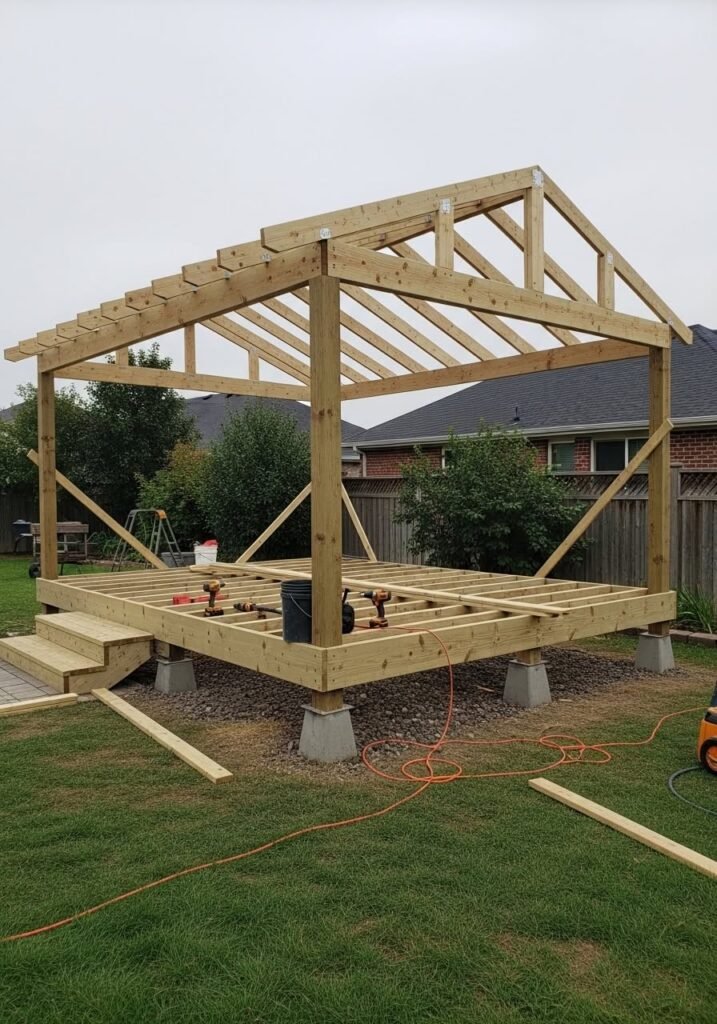
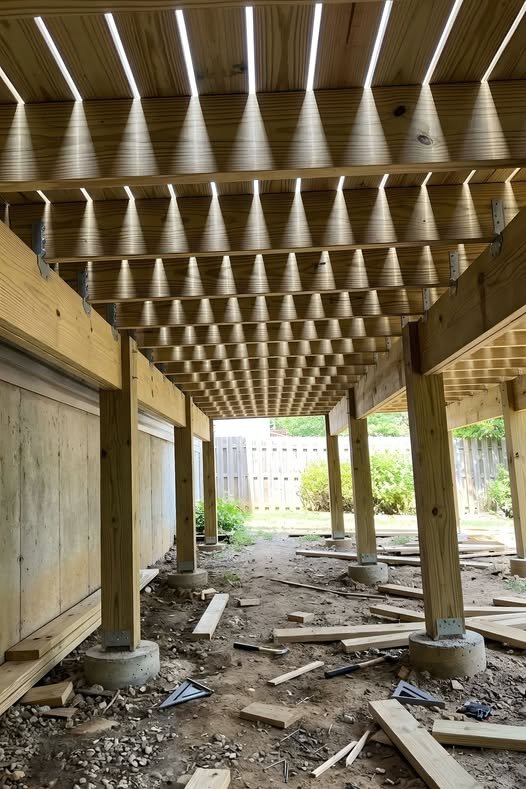
Deck Framing
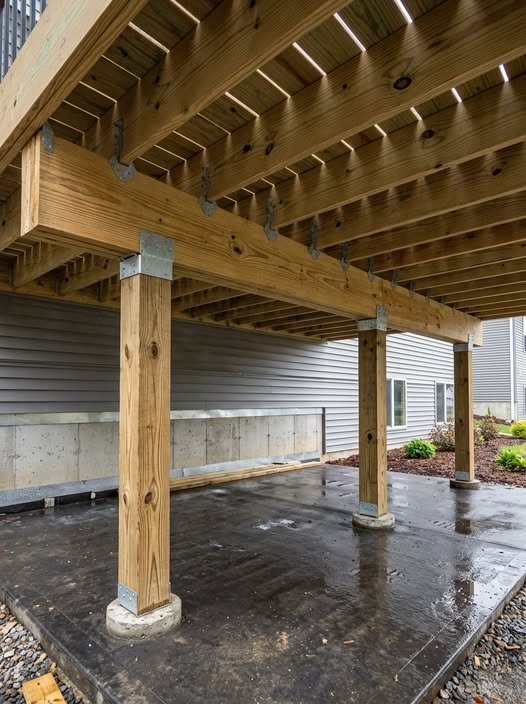
Ledger + JoistsDeck structural framing — properly flashed ledger boards, frost-depth footings, joists at correct span, beam sizing, posts and beam connections.
- Frost-depth footings 48″
- Ledger flashing right
- Joist hangers galvanized
Structural Modifications
Wall Removal, BeamsLoad-bearing wall removal with proper temporary support and beam installation. Open-concept renovations. Wall straightening. Sister joist installation for damaged framing.
- LVL or steel beam sizing
- Temporary support shoring
- Engineered load paths
Lumber Types We Use
▸ Right material for the structural applicationMA Building Code Framing Requirements
Framing in Massachusetts follows 780 CMR (MA State Building Code) — currently based on the IRC 2021 with state amendments. Key framing requirements we follow on every project:
Stud Spacing
16″ on-center standard. 24″ allowed for some applications with engineering. 12″ for heavy loads.
Snow Load 40+ PSF
Roof framing designed for MA snow loads — 40 PSF most areas, higher in some western MA towns.
Wind Load 110 MPH
Wall sheathing nailing and connections sized for 110 MPH design wind speed (coastal higher).
Hurricane Ties
Roof-to-wall connections with Simpson hurricane ties or equivalent in coastal/high-wind zones.
Header Sizing
Headers over window/door openings sized per span tables. 2×8 minimum on most exterior openings.
Fire-Blocking
Fire-blocking at all vertical/horizontal cavity interruptions. Stops fire spread between floors.
Egress R310
Basement bedrooms require egress windows with specific minimum dimensions and accessibility.
Inspections
Framing inspection required by local building department before drywall. We coordinate.
Who Hires Our Framing Services
Framing work comes from different types of clients with different needs. We serve all of these:
Direct Homeowners
Adding a room? Finishing the basement? Building a deck? We do framing as part of full-project remodels for homeowners directly.
General Contractors
GCs running multiple projects subcontract framing to crews like ours. Reliable, code-compliant, on-schedule framing work.
Design-Build Firms
Architects and design-build firms hire our framing services for their custom project execution. Plans-to-framing accuracy.
Property Investors
House flippers and rental property investors need framing for major renovations, additions, or BRRRR-strategy rehabs.
New Construction Owners
Building from scratch on owned land or new lot? We frame the whole shell from foundation to roof system.
Storm Damage / Insurance
After tree fall, fire, water damage, or other structural damage. Insurance-coordinated structural rebuild work.
Our Framing Process
Standard framing projects follow this sequence. Timelines vary from days to weeks based on scope:
Plan Review
Review architectural plans or design intent. Identify structural questions. Note tie-in points to existing structure.
Estimate & Material Take-Off
Full lumber takeoff list. Headers, beams, sheathing, hardware. Written estimate and timeline.
Permit Coordination
Submit framing plans to local building department. Wait for permit approval before starting work.
Layout
Snap chalk lines for wall plates. Lay out stud positions, door/window openings. Plumb-line existing structure.
Wall Plates
Top plates and bottom plates positioned and secured. Plumb-checked. Marked for stud positions.
Wall Erection
Walls assembled, raised, and braced. Headers installed. Window and door openings framed.
Floor Joists / Roof Rafters
Floor joist or roof rafter system installed. Subfloor laid. Roof sheathing applied.
Sheathing
Exterior wall sheathing applied. Sheathing properly fastened to studs. Edges flush.
Framing Inspection
Building inspector verifies framing meets code. Approval before next trades enter.
What Affects Framing Cost
Framing cost depends on these factors. Square footage and complexity are biggest:
Square Footage
Primary cost driver. Framing typically priced per sq ft of floor area framed.
Stories
Single-story easiest. Two-story doubles floor framing. Walk-out basement adds complexity.
Roof Complexity
Gable roof simplest. Hip roofs more cuts. Complex rooflines with valleys and dormers premium.
Structural Beams
LVL or steel beams for open-concept layouts. Custom-sized beams cost significantly more.
Lumber Prices
Lumber pricing fluctuates significantly. Quotes valid for 30 days due to price volatility.
Site Access
Easy crane access cheapest. Tight urban lots require hand-carrying material — slower work.
Existing Structure Tie-In
Additions tying into existing roof/floor systems harder than new freestanding builds.
Engineering Required
Complex spans or unusual loads may need engineered drawings. Cost passes through.
Why Choose JM All-Pro for Framing
01Plumb & Square Standard
Walls plumb, corners square, floors level. The foundation of every clean drywall, trim, and tile job that follows.
02MA Licensed
CSL #121166, HIC #214808. Insured. MA construction supervisor.
03780 CMR Compliance
Current MA building code requirements applied to every project. Pass framing inspections first time.
04Snow Load Engineered
40+ PSF roof load standard for MA. We don’t undersize roof framing to save lumber.
05Header Sizing Right
Headers sized per code span tables. No bouncing doors a decade later from undersized headers.
06Subcontracting Welcome
GCs, design-build firms, and other builders subcontract our crew. Reliable, on-schedule, code-compliant.
07Tie-In Expertise
Additions tying into existing structure done right. Match existing roof pitch and floor heights.
08Inspector-Approved
Building inspector relationships across MA. Our framing passes inspection on the first attempt.
Framing Service Areas in Massachusetts
Based in Clinton, MA. Framing services across Worcester County, Middlesex County, and MetroWest:
Related Services
Framing Services FAQs
How much does framing cost in Massachusetts?
Framing cost varies by project scope, square footage, stories, roof complexity, and lumber prices at time of quote. Simple basement partition walls are the most affordable. Full second-story additions are the most expensive. Custom roof systems with valleys and dormers add significant cost. Lumber pricing fluctuates — quotes valid 30 days due to material price volatility. Written estimates after on-site visit and plan review.
Do you subcontract framing for general contractors?
Yes — we welcome subcontracting work from GCs, design-build firms, custom home builders, and other contractors. We provide framing as a stand-alone service or as part of full project execution. Code-compliant, on-schedule, plumb-and-square framing that other trades can build cleanly on top of.
What’s the standard stud spacing?
16″ on-center is the residential standard for both 2×4 and 2×6 wall studs. 24″ on-center is allowed for some applications with proper engineering. 12″ on-center is used for heavily loaded walls or shear-resistant assemblies. We follow MA 780 CMR requirements for each application.
How long does framing take?
Basement partition walls: 1-3 days. Single-room addition: 3-7 days. Two-story addition: 1-3 weeks. Detached garage: 1-2 weeks. Whole-house new framing: 3-6 weeks. Material lead time on engineered lumber (LVL beams, TJI joists) can extend timelines.
Do you handle the engineering?
For standard residential framing within prescriptive code limits, no engineer required — we apply 780 CMR span tables and prescriptive requirements directly. For complex spans, unusual loads, or custom designs outside code prescriptive limits, a structural engineer’s stamped drawings are required. We coordinate with engineers when needed.
What about snow load?
Massachusetts roof framing must handle minimum 40 PSF (pounds per square foot) ground snow load — higher in some western MA towns up to 50+ PSF. This drives rafter sizing, ridge beam sizing, and trussed roof engineering. We never undersize roof framing to save lumber. MA winter snow load is non-negotiable.
Do you do load-bearing wall removal?
Yes. Open-concept renovations often require removing load-bearing walls. We install proper temporary shoring, install correctly-sized LVL or steel beams to take the load, and tie the new beam into existing structure. Engineering and permits required. We coordinate the full process.
Do framing inspections require homeowner presence?
No — the homeowner doesn’t need to be present for framing inspections. The building inspector visits the site, we walk them through the framing work, and they verify compliance with stamped plans and code. Approval is typically same-day or next-day. We coordinate inspection scheduling.
What if my project requires non-standard framing?
For non-standard applications — long spans, cathedral ceilings, post-and-beam, timber frame, structural insulated panels (SIPs), or unusual load conditions — we work with structural engineers to design the specific framing system. Cost is higher but doable. Discuss during the consultation.
How do I get started?
Call (508) 925-0396 or submit the quote form. Tell us project type (addition, basement, garage, ADU, etc.), approximate scope, and whether you have plans yet. We schedule a site visit, review plans if available, provide framing scope estimate, and coordinate with permits and other trades.
The Skeleton Your Whole Build Stands On
Free on-site visit, plan review, and written framing estimate. 780 CMR compliant, snow-load engineered, plumb-and-square standard. Subcontracting welcomed for general contractors and design-build firms.
Recent Projects
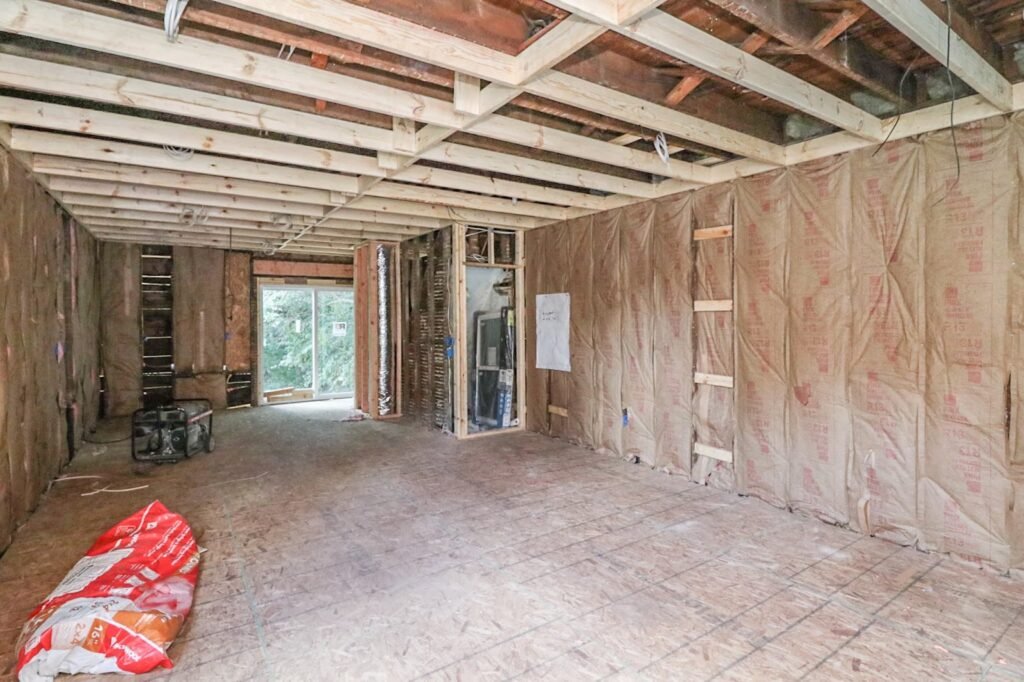
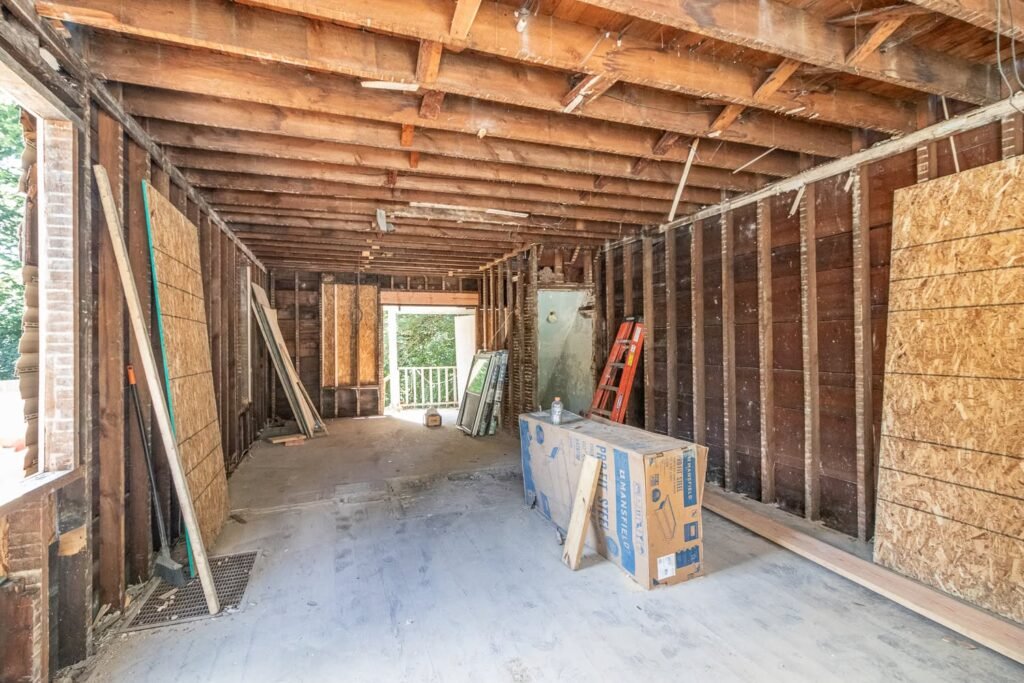
A few real addition and framing projects completed by our team across Worcester County & Central MA. View our full project gallery →
Explore More
Related Services
Cost Guides
Areas We Serve
Free estimate: (508) 925-0396