Patio Installation Outdoor living, properly built from the base up.
MA contractor installing paver patios, poured concrete patios, flagstone, brick, and natural stone patios across single-family and rental properties. Frost-depth base prep, proper drainage, polymeric sand joints, mortar-set installations. Built to handle 30 New England winters.
The Base Decides How Long Your Patio Lasts
A patio is exactly as good as what’s underneath it. The pretty pavers on top get all the attention, but the base layer underneath — the compacted gravel, the geotextile fabric, the proper drainage slope — is what decides whether you have a flat, even patio at year 25, or a heaving, settling mess at year 5.
Massachusetts winters punish patios that weren’t built right. Frost heaves shift the ground 4-8 inches every year. Snow melts and refreezes inside joints. Spring rain runs sideways into anything that’s not sloped properly. A shortcut on the base layer is the difference between a patio that lasts 30 years and one that needs ripping out in 5.
At JM All-Pro Services, we install patios with a 12-inch compacted base standard, polymeric sand joints, slight pitch for drainage, and proper edge restraint. Pavers, poured concrete, flagstone, brick, natural stone — done with the build quality that matches the materials.
◧Six Patio Materials We Install
Each material has different cost, durability, look, and maintenance profile. The right one depends on your aesthetic, budget, and how much maintenance you want over decades:
Concrete Pavers
Manufactured concrete units in standard shapes. Affordable, durable, replaceable individually. Many colors and styles. The MA backyard standard.
Poured Concrete
Monolithic poured slab — simplest material. Plain broom finish, exposed aggregate, or stamped pattern. Cheapest per sq ft, no joint maintenance.
Stamped Concrete
Poured concrete stamped to look like flagstone, brick, or stone. Mid-cost option offering decorative appearance without paver expense.
Flagstone Patio
Natural irregularly-shaped stone slabs. Each piece unique. Premium look. Either set in mortar bed or dry-laid on sand base.
Clay Brick Patio
Traditional clay bricks — timeless New England look. Used for historic-style homes, walkways, traditional gardens. Different from concrete pavers.
Natural Stone
Bluestone, granite, travertine, or limestone slabs. Highest-end material option. Beautiful, durable, expensive. Mortar-set on concrete slab base.
How MA Homeowners Use Their Patios
The right size, shape, and material depend on how you’ll use the patio. Common use cases drive the design:
iOutdoor Dining
Table + 4-6 chairs needs 12’×14′ minimum. Cohesive paver pattern, level surface for chairs and table stability.
iiLounge / Seating Area
Couches, fire pit, conversation zones. Larger 16’×20′ typical. Often combined with retaining walls or pergola.
iiiGrill / Outdoor Kitchen
Cooking zone with grill, prep counter, sometimes pizza oven. Adjacent to dining or seating areas.
ivPool Surround
Around an in-ground pool. Slip-resistant texture critical. Coping stones along pool edge. Drainage essential.
vFire Pit Plaza
Smaller circular or square patio dedicated to fire pit area. 12’×12′ typical. Often paver with stone fire pit.
viSide Yard Connector
Walkway-width patio connecting front and back yards. Often 4-6′ wide, longer length. Side gate destination.
viiHot Tub Surround
Reinforced base for hot tub weight (5,000+ lbs filled). Surrounding patio area for entry/exit and seating.
viiiSun Deck / Coffee Patio
Small east-facing morning patio off bedroom or living room. 8’×10′ typical. Maximizes morning sun exposure.
◧Paver Layout Patterns
The way pavers are arranged changes the entire look of the patio. The four most popular MA patterns:
Running Bond
Offset rows. Simple, modern. Most popular.
Herringbone
45° or 90° angles. Strong, traditional.
Basket Weave
Alternating pairs. Classic, decorative.
Circular / Radial
Curved patterns. Fire pit centerpieces.
What’s Under Your Patio Matters More Than What’s On Top
The most common reason patios fail in MA is insufficient base preparation. The standard professional build has multiple specific layers, each doing a specific job. Skip any of these and the patio will eventually shift, sink, or heave:
Excavation Depth
Dig down to remove topsoil and provide room for base. Below frost depth where possible.
Geotextile Fabric
Non-woven fabric separates soil from base aggregate, prevents silt mixing, allows water through.
Compacted Gravel Base
Crushed stone (3/4″ minus) compacted in 2-3″ lifts using plate compactor. The structural foundation.
Bedding Sand
1″ of coarse sand screeded flat. The leveling layer that pavers sit on directly.
Pavers + Polymeric Sand + Edge Restraint
Pavers laid in pattern. Polymeric sand swept into joints. Plastic edge restraint at perimeter.
◧Patio Sizing Guide
Patios sized too small look cramped and don’t function. Common dimensions by use:
Coffee Patio
Two chairs + small table. Morning coffee, bedroom door access.
Dining Patio
Table for 4-6 + chairs with room to pull out. Standard dining setup.
Dining + Lounge
Combined dining area + separate seating with couches. Most common backyard.
Outdoor Living Room
Dining + lounge + grill zone + fire pit area. Full outdoor entertaining.
◧Our Patio Installation Process
Most patio installations complete in 1-3 weeks depending on size and material. Standard sequence:
Design Consult
On-site walk, discuss size, material, pattern, drainage considerations.
Written Estimate
Detailed scope with materials, dimensions, pattern, edge details, timeline.
Dig-Safe Call
811 call 72 hours before digging. Underground utilities marked.
Excavation
8-12″ excavated. Topsoil removed. Sub-base prepared for compaction.
Base Build
Geotextile fabric, 6-8″ gravel compacted in lifts, 1″ bedding sand screeded.
Paver Install
Pavers laid in pattern. Cuts made at edges. Pitch maintained for drainage.
Edge Restraint + Sand
Plastic edge restraint installed. Polymeric sand swept into joints, activated with water.
Final Compaction + Cleanup
Final compaction pass with rubber mat. Cleaned. Walkthrough with you.
◧What Affects Patio Cost
Patio cost is driven by these factors. Total square footage and material are the biggest:
Total Square Footage
Primary cost driver. Cost scales roughly linearly with size.
Material Choice
Poured concrete cheapest. Pavers mid. Stamped concrete mid. Flagstone high. Natural stone premium.
Pattern Complexity
Running bond simplest. Herringbone needs more cuts. Circular/radial most labor.
Excavation Difficulty
Soft topsoil easy. Hard clay, rocks, or tree roots slow excavation significantly.
Site Access
Truck access to back yard easy. Tight side-yard access means wheelbarrowing all materials.
Slope / Drainage
Sloped properties need engineered drainage. Retaining walls may be required.
Edge Details
Soldier course borders, contrasting bands, or decorative edges add material and labor.
Add-Ons
Built-in fire pit, seat walls, lighting, drainage swales all add scope.
◧Why Choose JM All-Pro for Your Patio
iBase Built Right
12″ total base depth standard. Geotextile fabric, compacted gravel in lifts, polymeric joints. No shortcuts.
iiDrainage Designed In
Proper pitch away from house (1/4″ per foot). Water moves where you want it, not toward the foundation.
iiiMA Licensed
CSL #121166, HIC #214808. Liability and workers comp insured.
ivMulti-Material
Pavers, poured concrete, stamped concrete, flagstone, brick, natural stone — all installed in-house.
vDig-Safe Always
811 call every job. Required by MA law and prevents utility strikes that ruin patios.
viPolymeric Sand
Polymeric joint sand standard, not regular sand. Locks pavers, prevents weeds and ant mounds.
viiEdge Restraint
Plastic edge restraint at all perimeter. Stops pavers from migrating outward over years.
viiiWritten Estimates
Itemized scope, dimensions, pattern, timeline. No surprise charges mid-project.
Patio Installation Service Areas
Based in Clinton, MA. Patio installation across Worcester County, Middlesex County, and MetroWest:
◧Related Services
◧Patio Installation FAQs
How much does patio installation cost in Massachusetts?
Cost depends heavily on material and size. Poured concrete is the lowest-cost option per sq ft. Concrete pavers and stamped concrete are mid-range. Flagstone and natural stone are premium tiers. A small 10×12 paver patio costs significantly less than a large 20×30 natural stone patio. Excavation difficulty, site access, drainage requirements, and decorative add-ons (fire pits, seat walls, lighting) all affect total cost. Written estimates after on-site walkthrough.
Do I need a permit for a patio in MA?
Most residential patios at ground level do not require building permits in MA. Patios that involve electrical (for lighting, outlets, hot tubs), gas lines (outdoor kitchens), or that are elevated more than 30″ above grade typically need permits. Pool surround patios have specific code requirements. We verify your town’s specific requirements before starting.
How long does a patio installation take?
Standard 200-400 sq ft paver patio: 1-2 weeks. Larger patios (400-800 sq ft): 2-3 weeks. Poured concrete patios are typically faster (1 week) but require 28-day cure time before heavy use. Stamped concrete adds 1-2 days for stamping. Weather delays excavation in rain and concrete pours in extreme heat or cold.
What’s the difference between concrete pavers and poured concrete?
Concrete pavers are individual manufactured units laid on a sand bed over compacted gravel — they flex with ground movement, can be lifted and replaced individually if damaged or stained, and don’t crack as a slab does. Poured concrete is a monolithic slab — lower cost, simpler install, but will crack eventually (control joints minimize where), can stain permanently, and difficult to repair invisibly. Pavers cost more upfront, less maintenance long-term.
Will my patio crack or settle?
Pavers don’t crack since they’re individual units. They can settle if the base wasn’t built right — most settling happens in year 1 and we re-level if needed. Poured concrete will eventually develop cracks (it’s the nature of large concrete pours). We use control joints to direct where cracks form, but cracks themselves are inevitable in concrete over 20+ years. Stamped concrete has the same cracking behavior as poured.
What’s the right slope for drainage?
Standard slope is 1/4″ per foot away from the house. So a 12-foot-wide patio attached to your house drops 3″ from house side to far edge. This moves water away from the foundation. Some patios need engineered drainage with surface drains, swales, or French drains depending on terrain and surrounding grade. We design drainage into every patio plan.
How long do paver patios last in MA?
Properly installed paver patios last 30+ years. The pavers themselves outlast that — the limiting factors are usually base settling (rare with proper install), edge restraint failure (replaceable), and joint sand washout (re-sandable). Properly maintained patios from the 1990s still look great today. Compare this to wood decks which need replacement every 15-25 years.
Do I need polymeric sand?
Yes — polymeric sand should be standard for any quality paver install. Regular sand washes out of joints, allows weeds and ants to come up through, and lets pavers shift. Polymeric sand contains binders that activate with water, locking pavers in place. It’s more expensive but the right answer.
Can you build a patio around an existing pool?
Yes. Pool surround patios are common — typically pavers or natural stone with coping stones along the pool edge. Slip-resistant texture is critical. Drainage must move water away from pool deck. Specific MA pool code (521 CMR) applies. We can also coordinate with pool contractors on new pool builds.
How do I get started?
Call (508) 925-0396 or submit the quote form. Tell us approximate size and shape, material preference, intended use (dining, lounge, pool, fire pit, etc.), and timeline. We schedule a free on-site walkthrough, discuss design options, and follow up with a written estimate. Spring and early summer are busy seasons — book early.
◧Ready to Build Outdoor Living?
Free on-site walkthrough and written estimate. We design patios that work with your yard, drain properly, and look beautiful for 30 years. Pavers, concrete, flagstone, stone — done with proper base prep that handles MA winters.
Recent Projects
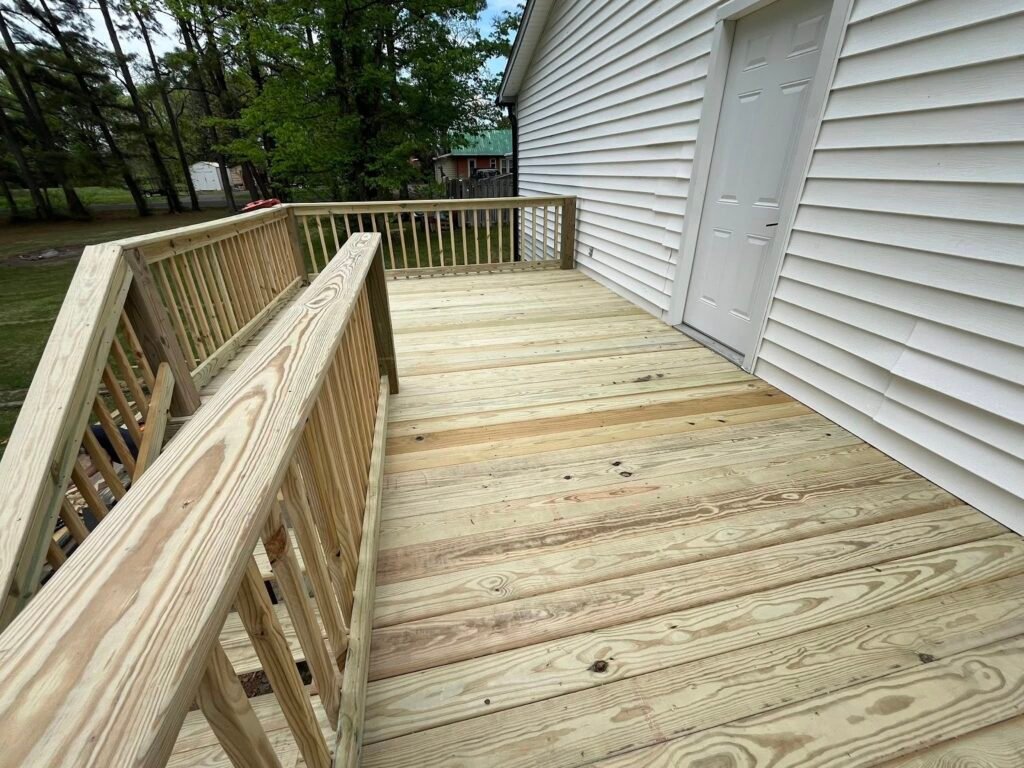
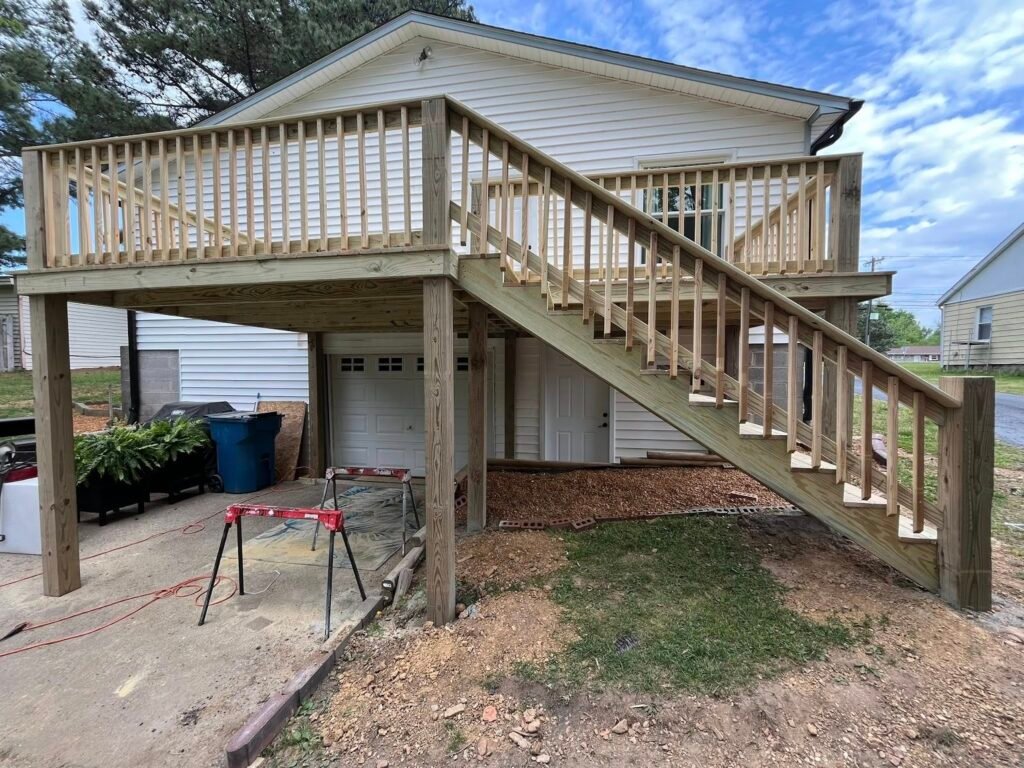
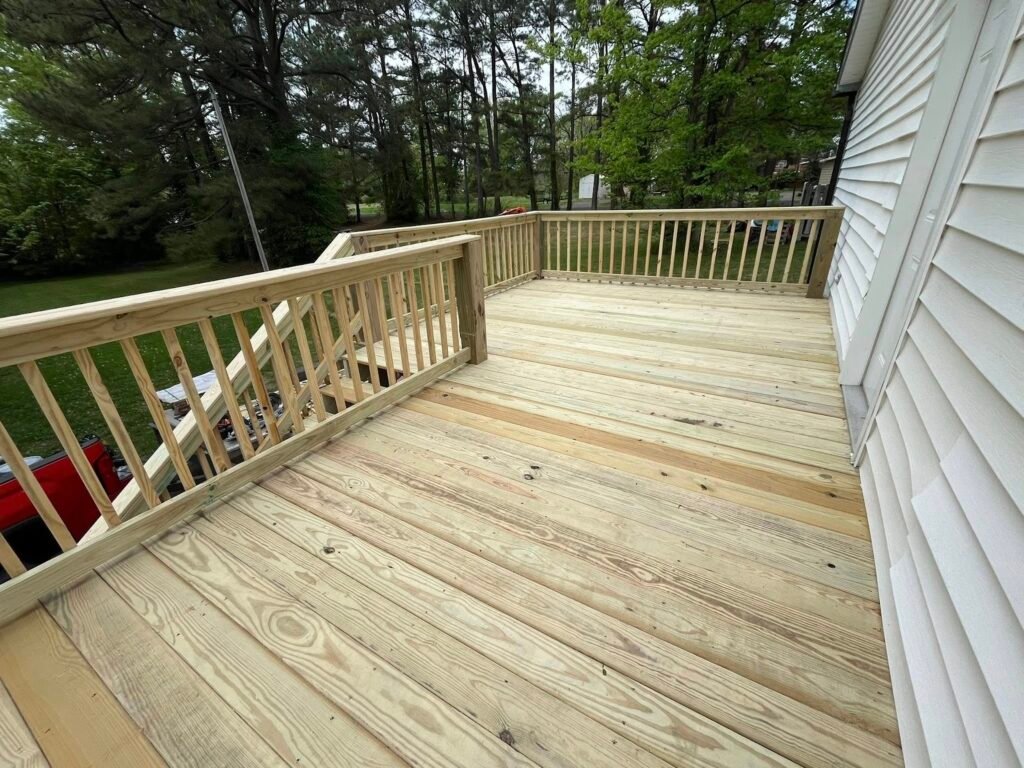
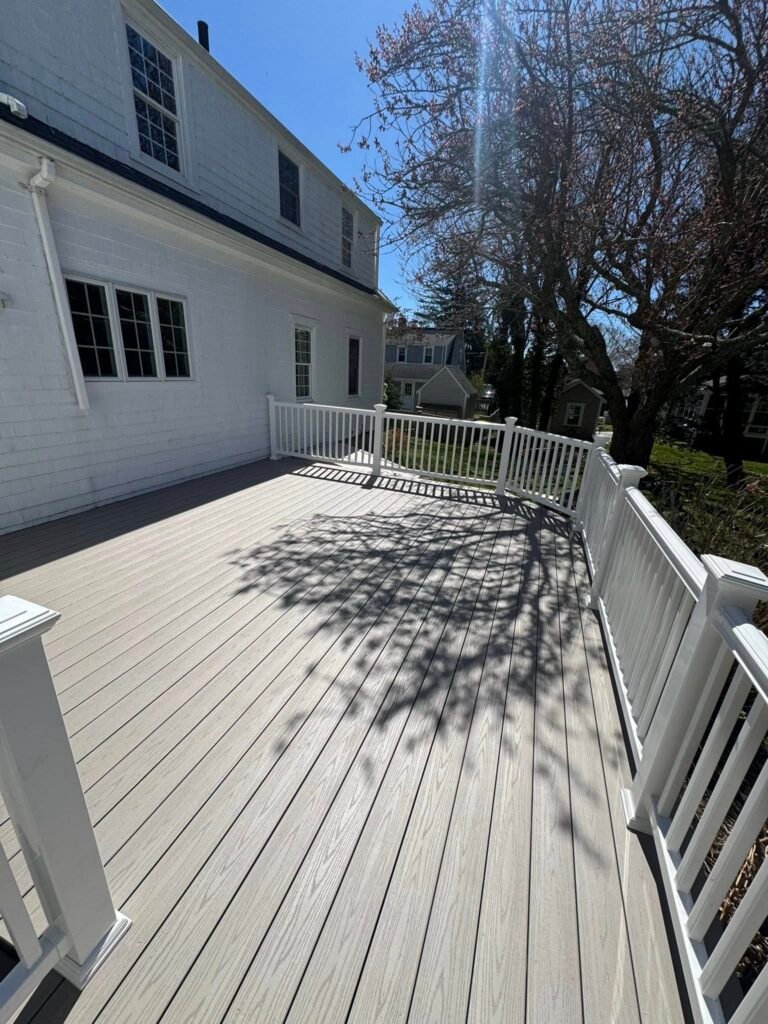
A few real deck building projects completed by our team across Worcester County & Central MA. View our full project gallery →