Deck Building in Massachusetts
New deck construction, deck replacement, composite and wood deck installation, custom railing, and professional deck staining. Built for New England weather — freeze-thaw cycles, snow load, salt air, and humid summers. Code-compliant, structurally sound, finished to last.
Decks Built for Massachusetts Weather
Decks in Massachusetts aren’t like decks anywhere else. They handle freeze-thaw cycles, 30″+ snow loads, salt air on the coast, and 90°F summer humidity. A deck built to Florida or Texas standards won’t last 10 years here. We design and build decks specifically for New England conditions — frost-depth footings, properly flashed ledger boards, code-compliant rail heights, and material spec’d for the climate.
New Deck Building
Design ▪ Permits ▪ Footings ▪ BuildBuilding a deck from scratch involves design, permits, structural engineering for larger decks, frost-depth footings, framing, decking installation, railing, and trim. The most common deck projects we build:
Single-Level Attached
Standard rectangular deck attached to home with ledger board
Multi-Level Deck
Two or more levels connected by stairs, ideal for sloped yards
Wraparound Deck
L-shape or U-shape wrapping around two or three sides of home
Freestanding Deck
Not attached to house — supports its own structure entirely
Roof / Covered Deck
Deck with full roof above for shade and rain protection
Pool / Hot Tub Deck
Reinforced deck framing to support pool or hot tub loads
Deck Replacement
Tear-Down ▪ Reframe ▪ Resurface ▪ RebuildMost decks need full or partial replacement around the 15-25 year mark in MA — sooner if poorly built originally. Replacement comes in tiers based on what’s salvageable:
Resurfacing Only
Decking boards + railing replaced; structure stays. Good frame, bad surface.
Partial Reframe
Some joists or beams replaced + new decking. Mid-tier rebuild.
Full Frame Replacement
Footings stay, everything above replaced. Common at 25+ year mark.
Complete Demo & Rebuild
Footings included. Full new deck on existing footprint or new layout.
Ledger Board Replacement
Critical safety repair — failed ledgers cause deck collapses.
Stair Replacement
Stairs are usually the first to fail. Often replaced before whole deck.
I — MATERIALSComposite vs Wood Decking
The single biggest decision in any deck project is material. Composite decking and wood each have real tradeoffs — there’s no “best” choice, just the right choice for your priorities:
📊 Side-by-Side Comparison
▸ Choose based on priorities🌲 Wood Decking
▸ Pressure-Treated / Cedar / Hardwood- Lower upfront cost (especially PT pine)
- Natural wood look, takes stain colors
- Cedar and hardwood naturally resist rot
- Repairable — replace individual boards easily
- Standard lumber yard sourcing
- Needs annual or biannual restaining
- Splinters, warps, cracks over time
- 15-25 year typical lifespan in MA
🔷 Composite Decking
▸ Trex / TimberTech / Fiberon- Higher upfront cost
- Wood-look colors built into board
- Zero rot, no splinters, no warp
- Hidden fastener systems available
- Mold/mildew resistant capped surface
- No staining ever — just wash with soap and water
- 25-50 year warranty depending on brand
- Premium PVC options stay cooler in sun
Composite Decking Installation
Trex ▪ TimberTech ▪ Fiberon ▪ AzekComposite decking has dominated MA new decks for the past decade. The capped composite boards available now look like real wood, last 25-50 years, and never need staining. Installation is different from wood — hidden fasteners, expansion gaps, and proper substrate prep matter:
Trex Composite
Market leader. Multiple lines: Enhance, Select, Transcend, Signature
TimberTech
Premium composite + PVC lines. AZEK PVC stays cooler in sun
Fiberon
Mid-tier composite. Good value, multiple color options
Hidden Fastener Systems
No visible screws on deck surface. Clean modern look
Picture Frame Border
Mitered border boards around perimeter. Premium finished look
Two-Tone / Inlay Patterns
Decorative inlay using contrasting board colors
Wood Deck Installation
PT Pine ▪ Cedar ▪ Mahogany ▪ IpeWood decks still have a place — they cost less upfront, look natural, and can be repaired more easily than composite. The right wood matters: pressure-treated pine is the budget choice, cedar a step up, and tropical hardwoods (Ipe, Cumaru) at the premium end:
Pressure-Treated Pine
Most common wood deck. Affordable, resistant to rot, takes stain
Cedar Decking
Naturally rot-resistant, beautiful grain, premium wood option
Mahogany Decking
Tropical hardwood. Rich color, dense, weather-resistant
Ipe (Brazilian Walnut)
Hardest hardwood. 75-year lifespan, requires hardwood-specific fasteners
Garapa / Cumaru
Tropical hardwoods alternative to Ipe. Comparable durability
5/4 vs 2×6 Decking
5/4 decking is standard. 2×6 stronger, longer joist spans possible
Deck Staining & Sealing
Clear ▪ Transparent ▪ Semi-Transparent ▪ SolidWood decks need restaining every 1-3 years in Massachusetts to protect against UV, moisture, and freeze-thaw damage. The stain type determines how much wood grain shows through and how often you’ll need to restain:
Dark Walnut
Rich brown
Cedar
Warm amber
Honey Gold
Light natural
Driftwood Gray
Weathered look
Solid Black
Modern bold
Clear Sealer
Natural protect
Stain Types
Clear Sealer
No color, just water/UV protection. Shortest lifespan (1 year)
Transparent Stain
Tints wood slightly, grain fully visible. 1-2 year lifespan
Semi-Transparent
More color, grain still visible. 2-3 year lifespan, most popular
Semi-Solid Stain
Heavy color, grain partially visible. 3-5 year lifespan
Solid Stain
Like paint, hides grain completely. 5+ year lifespan
Power Wash + Restain
Strip old stain, sand, reapply. Refresh service every 2-3 years
Deck Railing Installation
Wood ▪ Composite ▪ Metal ▪ Cable ▪ GlassRailing is required by MA code on any deck more than 30″ above the ground. Beyond code, railing is often the most visible design element — it’s what people see from a distance. Common railing types we install:
Wood Balusters
Traditional 2×2 wood spindles between top and bottom rail. Stained to match deck.
Composite Railing
Matches composite decking. No maintenance, multiple color options.
Aluminum / Metal Railing
Powder-coated aluminum. Modern look, never rusts, multiple colors.
Cable Railing
Stainless cables run horizontally. Maximum view, modern aesthetic.
Glass Panel Railing
Tempered glass panels. Premium, unobstructed view.
Built-In Bench Railing
Bench seat doubles as railing. Maximize seating on smaller decks.
II — SIZESDeck Size Planning Guide
Right-sizing your deck matters — too small and it feels cramped, too big and it overwhelms the yard. Typical deck sizes and what they fit:
Small Patio Deck
Table for 4. Small grill. Two lounge chairs. Compact urban yards.
Standard Family Deck
Table for 6, grill area, lounge chairs. Most common MA deck size.
Entertainment Deck
Table for 8, separate lounge area, outdoor kitchen possible.
Large Outdoor Living
Multiple zones — dining, lounge, grill, possibly hot tub.
Multi-Level / Wraparound
Multiple connected zones. Pool/hot tub support. Outdoor kitchen.
III — CODEMA Deck Code Requirements
📋 Massachusetts Building Code for Decks
Deck collapses kill or injure people in the US every year — almost all from improperly built or unmaintained decks. Massachusetts code requirements exist to prevent that. We build every deck to or above code:
Frost-Depth Footings
48″ deep minimum in MA. Below frost line so footings don’t heave with freeze-thaw cycles.
Ledger Board Flashing
Properly flashed ledger boards. Water infiltration here causes ledger rot and deck collapses.
Through-Bolted Ledger
Ledger bolted through rim joist with proper hardware — not nailed or screwed only.
Joist Hangers Required
Galvanized joist hangers — not nailed flush. Specific hangers for treated lumber.
Railing Height & Spacing
36″ minimum railing height. Balusters spaced max 4″. No 4″ sphere passage.
Stair Code Compliance
7-3/4″ max riser height, 10″ min tread depth. Handrail required on 4+ risers.
Snow Load Engineering
MA snow load 40-50 PSF depending on region. Decks designed to handle it without failure.
Building Permit Required
All attached decks require permits in MA. We pull all required permits and schedule inspections.
IV — PROCESSOur Deck Building Process
On-Site Consultation
Walk the yard. Discuss layout, size, and use. Material recommendation (wood vs composite). Site evaluation for footing depth and access.
Design & Material Selection
Layout drawn with dimensions. Material brand/line selected (Trex line, wood species, railing system). Stain color if wood.
Written Estimate
Detailed scope with all materials, labor, permit fees, and timeline. Signed before any work begins.
Permits Pulled
Building permits filed with your town. Engineering documents if required for larger or multi-level decks.
Demo (If Replacement)
Existing deck removed. Footings inspected for re-use or excavated for replacement. Site cleared.
Footings & Posts
Frost-depth footings poured (48″ minimum). Posts set and plumbed. Inspection by town before continuing.
Frame Construction
Ledger flashed and through-bolted. Beams, joists, blocking, joist hangers installed per code.
Decking & Railing
Deck boards installed (hidden fastener or screwed). Railing system installed. Stairs built.
Stain (If Wood)
For wood decks: stain applied after appropriate seasoning period (4-12 weeks for PT pine, ready immediately for cedar/hardwood).
Final Inspection & Walkthrough
Town final inspection. Walk-through with you. Punch list addressed. Project handoff.
⚠ Deck Mistakes That Kill Decks (and Sometimes People)
Decks fail for predictable reasons — almost always something cut as a corner during construction. These are the issues we see most often when inspecting existing decks for replacement:
✕ Improper Ledger Attachment
Ledger boards nailed (not bolted) or attached without flashing. #1 cause of deck collapses. Water gets behind, rots framing.
✕ Footings Too Shallow
Footings less than 48″ deep in MA. Frost heave lifts and shifts the deck every winter, breaking framing.
✕ Wrong Hardware
Regular nails or screws used with PT lumber. Treated lumber corrodes regular steel. Galvanized or stainless required.
✕ Joists Not Hung Properly
Joists toe-nailed to beam instead of joist hangers. Connection fails under snow load.
✕ Railing Too Short / Spacing Too Wide
30-32″ tall railing (code is 36″ min). Balusters spaced wider than 4″. Code violation + child safety risk.
✕ Composite on Old Frame
Premium composite installed on rotting wood framing. Frame fails, you lose your investment.
✕ Staining Too Soon
Pressure-treated lumber stained before drying. Stain doesn’t absorb, peels within months.
✕ Skipped Permits
Unpermitted deck. Comes up at home sale, requires retroactive inspection, sometimes demolition.
V — WHY USWhy Choose JM All-Pro for Deck Work
FROST-DEPTH FOOTINGS
48″ deep footings standard, every time. No heave, no winter shifting.
FLASHED LEDGERS
Proper ledger flashing prevents the #1 cause of deck collapse — water infiltration.
MA LICENSED & INSURED
MA CSL #121166 and HIC #214808. Liability + workers comp coverage.
COMPOSITE & WOOD EXPERTS
Trex, TimberTech, Fiberon for composite. PT, cedar, mahogany, Ipe for wood.
CODE-COMPLIANT BUILDS
Snow load, railing, ledger, joist spacing — all to current MA code.
PERMITS HANDLED
We pull all permits, coordinate inspections, manage the town process.
WRITTEN ESTIMATES
Detailed scope, materials, labor, and timeline before any work begins.
INSPECTION-FIRST APPROACH
For replacements, we inspect first — sometimes only part of the deck needs replacing.
VI — AREASService Areas Across Massachusetts
📍 Where We Build Decks
Based in Clinton, MA. Deck building, replacement, staining, and railing installation across Worcester County, Middlesex County, and MetroWest:
VII — RELATEDRelated Services
VIII — FAQDeck Building FAQs
Composite or wood — which should I choose?
Depends on priorities. Composite costs more upfront but never needs staining and lasts 25-50 years. Wood costs less but needs staining every 1-3 years and lasts 15-25 years. If you’ll stay in your home 20+ years, composite is usually the better investment. If you’re flipping or selling soon, wood may make more sense.
How long does a deck build take?
Standard 200-300 sq ft deck takes 1-2 weeks once started, weather permitting. Permit time adds 1-3 weeks before mobilization. Multi-level or large decks (400+ sq ft) take 3-4 weeks. Deck replacement is typically faster than new builds if existing footings can be reused.
How much does a new deck cost in MA?
Varies massively by size, material, and complexity. Pressure-treated wood decks are the lowest tier. Cedar mid-tier. Composite premium. Hardwoods (Ipe, Cumaru) at the highest end. Railing system also drives cost — cable and glass railings are premium upgrades. Written estimates provided after site visit.
Do I need a permit for a deck?
Yes, almost always. All attached decks (connected to the house) require building permits in Massachusetts. Even some freestanding decks need permits depending on size and your town’s rules. We pull all required permits and coordinate inspections.
When can I stain a new pressure-treated deck?
4-12 weeks after installation, depending on weather. Pressure-treated lumber comes wet from the treatment process. Staining too soon means the stain doesn’t penetrate and peels off within months. We test the wood with a water bead test before staining — if water absorbs, the wood is ready.
How often does a wood deck need restaining?
In Massachusetts, every 1-3 years depending on stain type and exposure. Clear sealers need yearly reapplication. Semi-transparent stains last 2-3 years. Semi-solid and solid stains 3-5 years. South-facing decks need restaining more often than shaded ones.
Can you build over a concrete patio?
Yes, in some cases. A “floating deck” or low-profile deck can be built directly over existing concrete with sleepers. Or the concrete can be demolished and a proper frost-depth footing deck built. Depends on your goals and budget.
Do composite decks really not need any maintenance?
“No maintenance” is overstated. Composite decks don’t need staining or sealing. But they do benefit from periodic cleaning with soap and water to remove mold, mildew, and dirt. Some early generation composite decks (15+ years old) had mold issues; modern capped composite has solved this.
Can you replace just part of my deck?
Yes — if your existing framing and footings are sound. Common partial replacement: replace decking and railing while keeping joists and beams. Or replace stairs only (often the first thing to fail). We inspect first and recommend the minimum work needed, not the maximum.
How do I get started?
Call (508) 925-0396 or submit the quote form with photos of your yard (or existing deck if replacing) and rough idea of size and material. We schedule a free in-home consultation, evaluate the site, discuss options, and follow up with a written estimate.
Ready to Build Your Deck?
Schedule a free in-home estimate. New construction, full replacement, resurfacing, staining, or railing upgrades — same code-compliant approach, same craftsmanship, same written estimates. We’ll walk your yard and follow up with a written quote.
Recent Projects
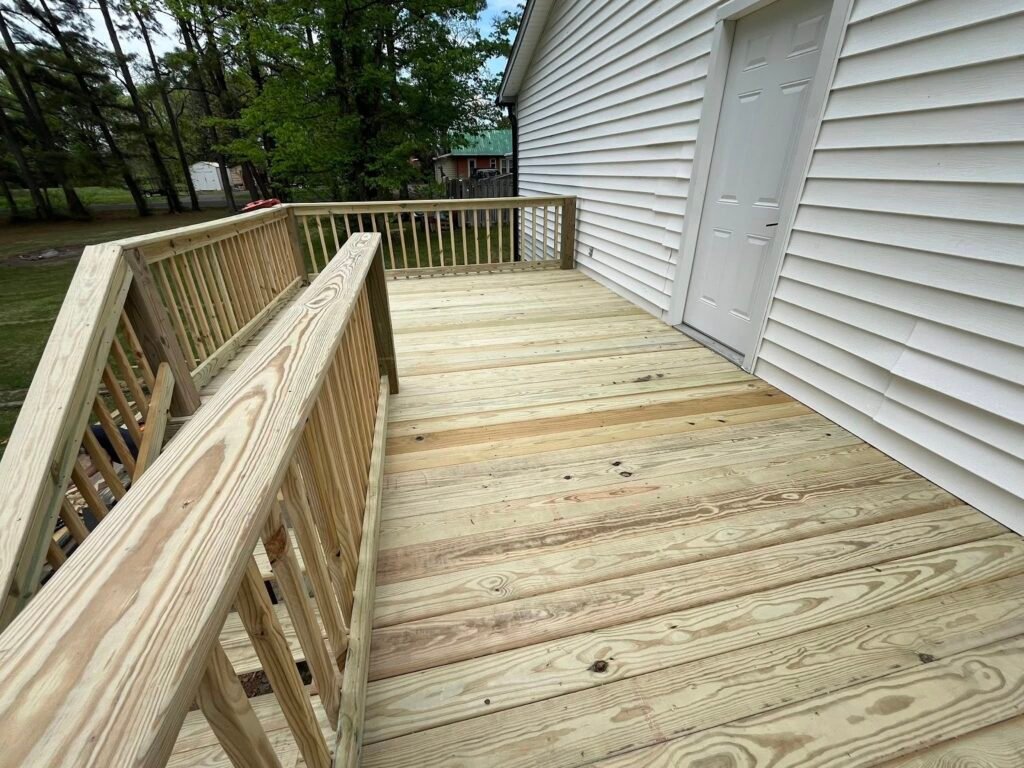
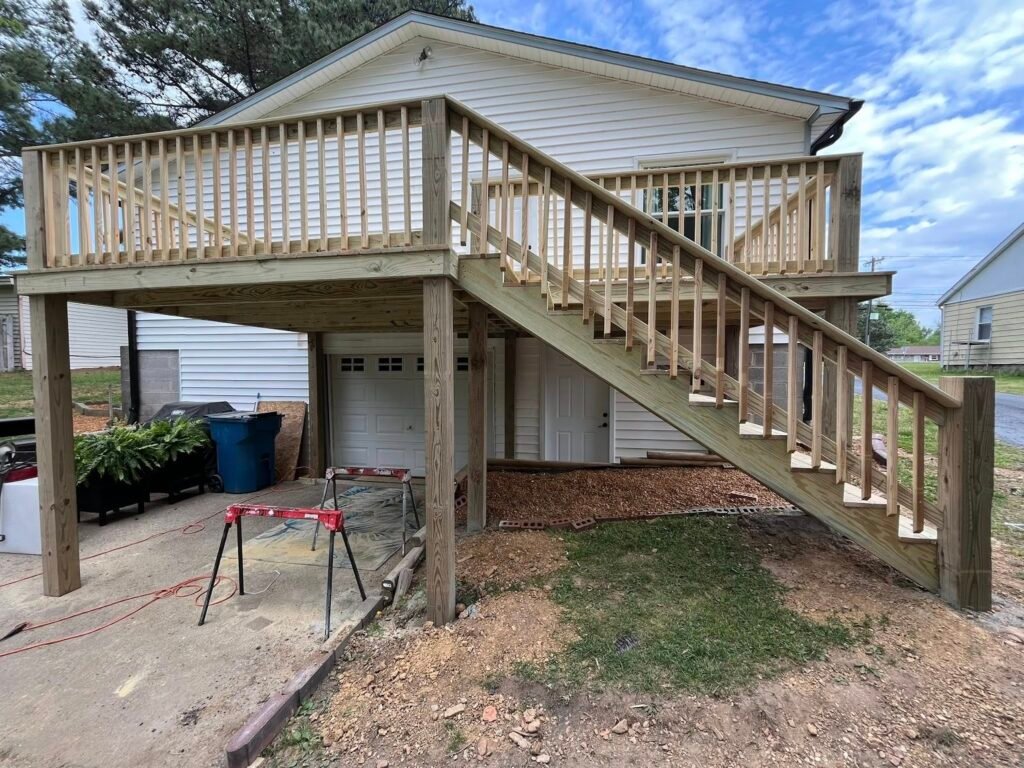
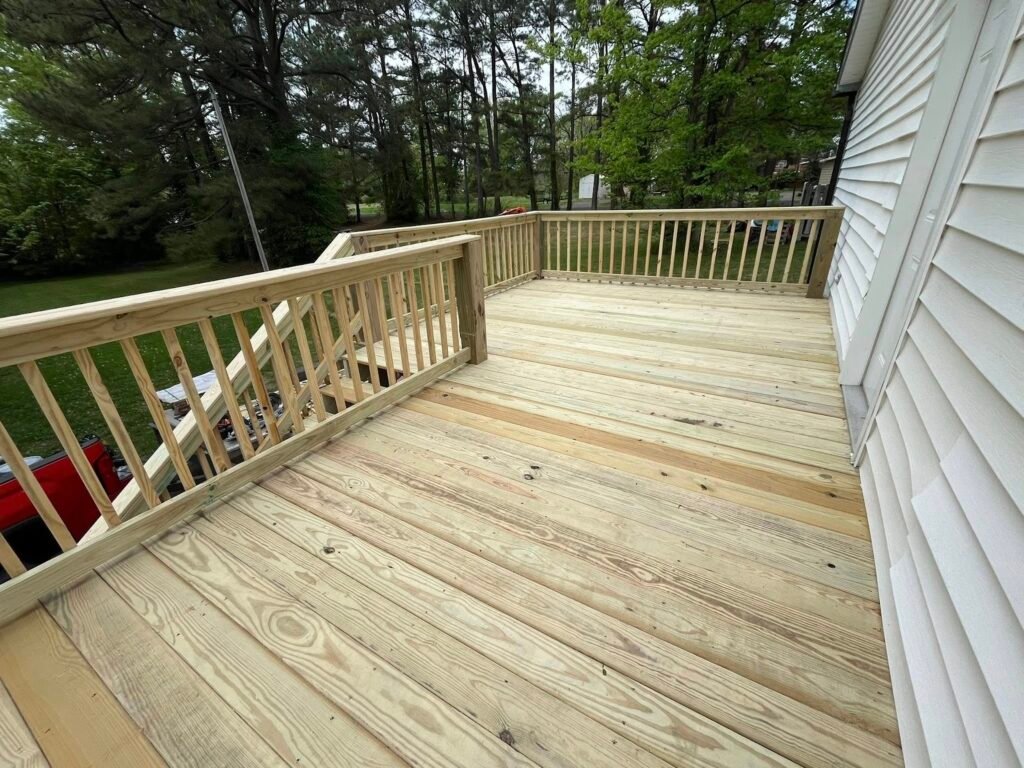
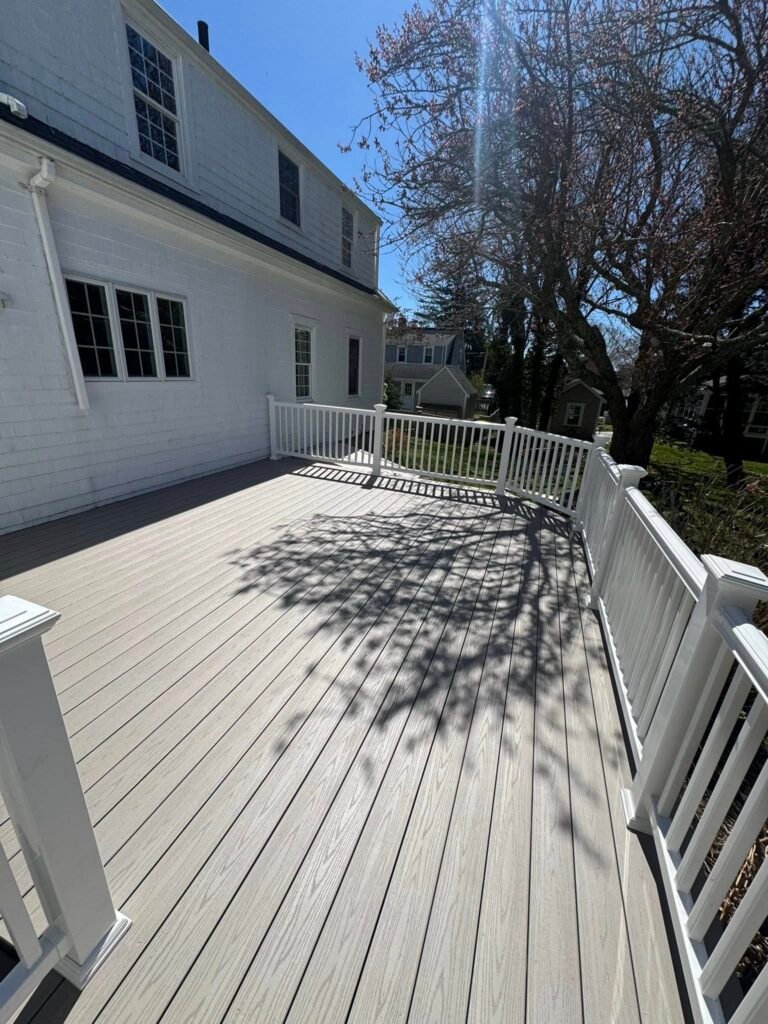
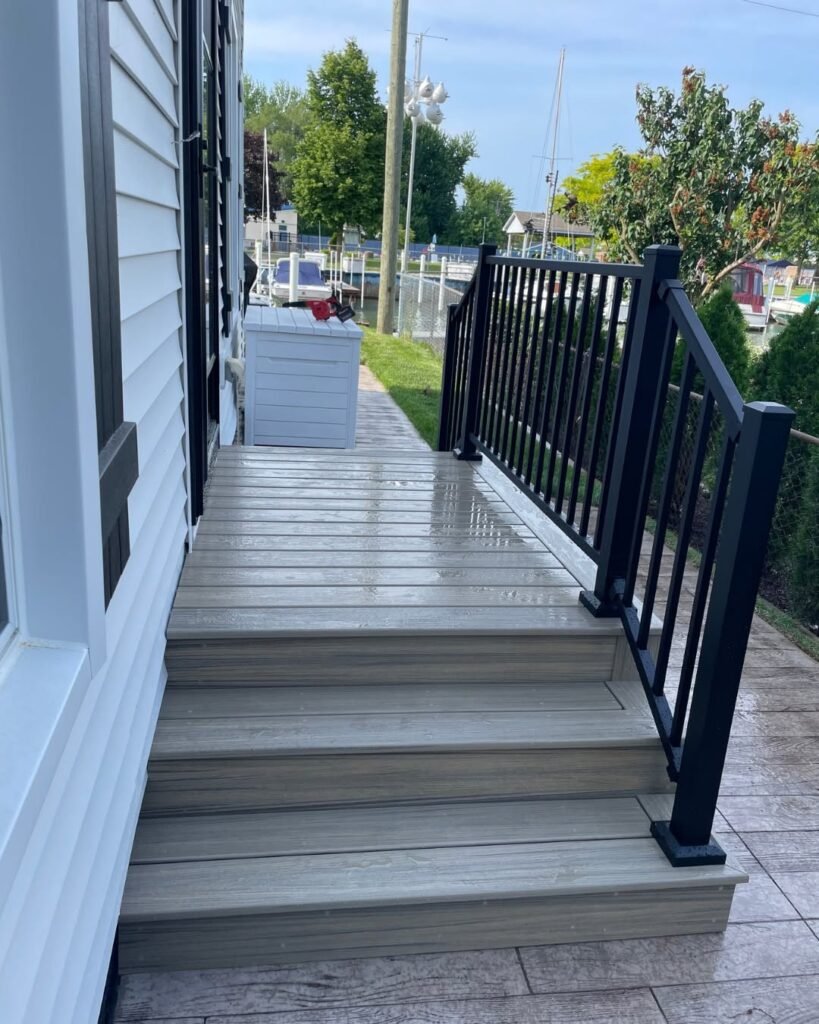
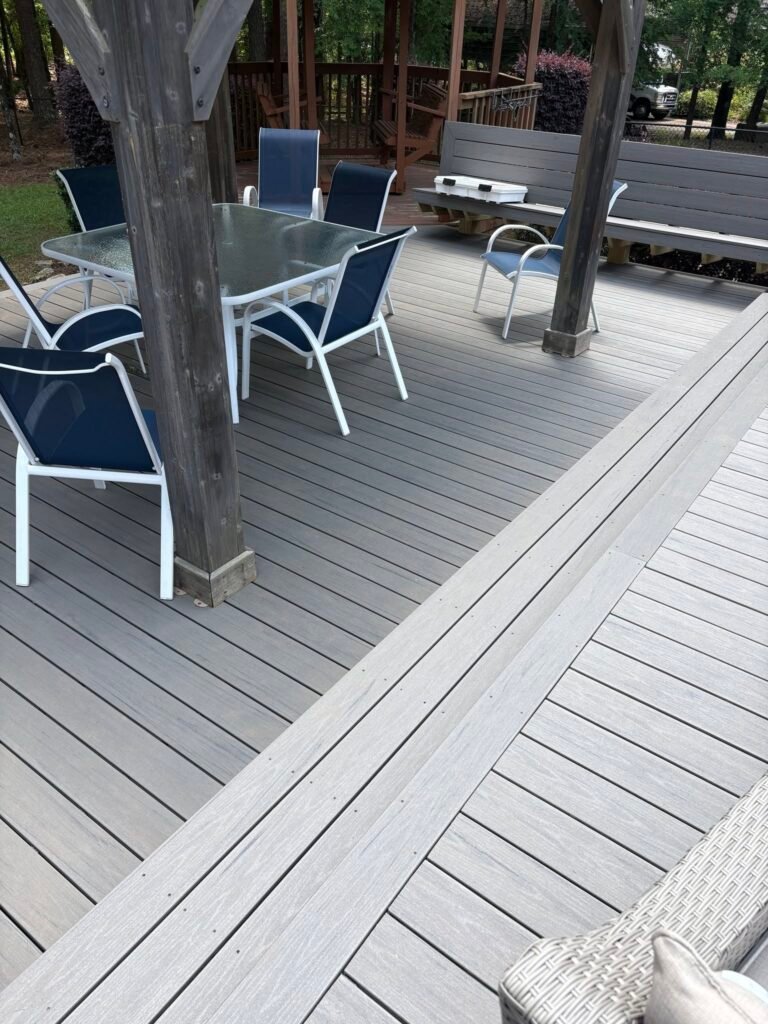
A few real deck building projects completed by our team across Worcester County & Central MA. View our full project gallery →